Íslenzkir Hljóðfæraleikarar
Read time:
3-4 min
Client:
Iceland University of the Arts
Industry:
arts & culture
Start:
End:
Duration:
9 days
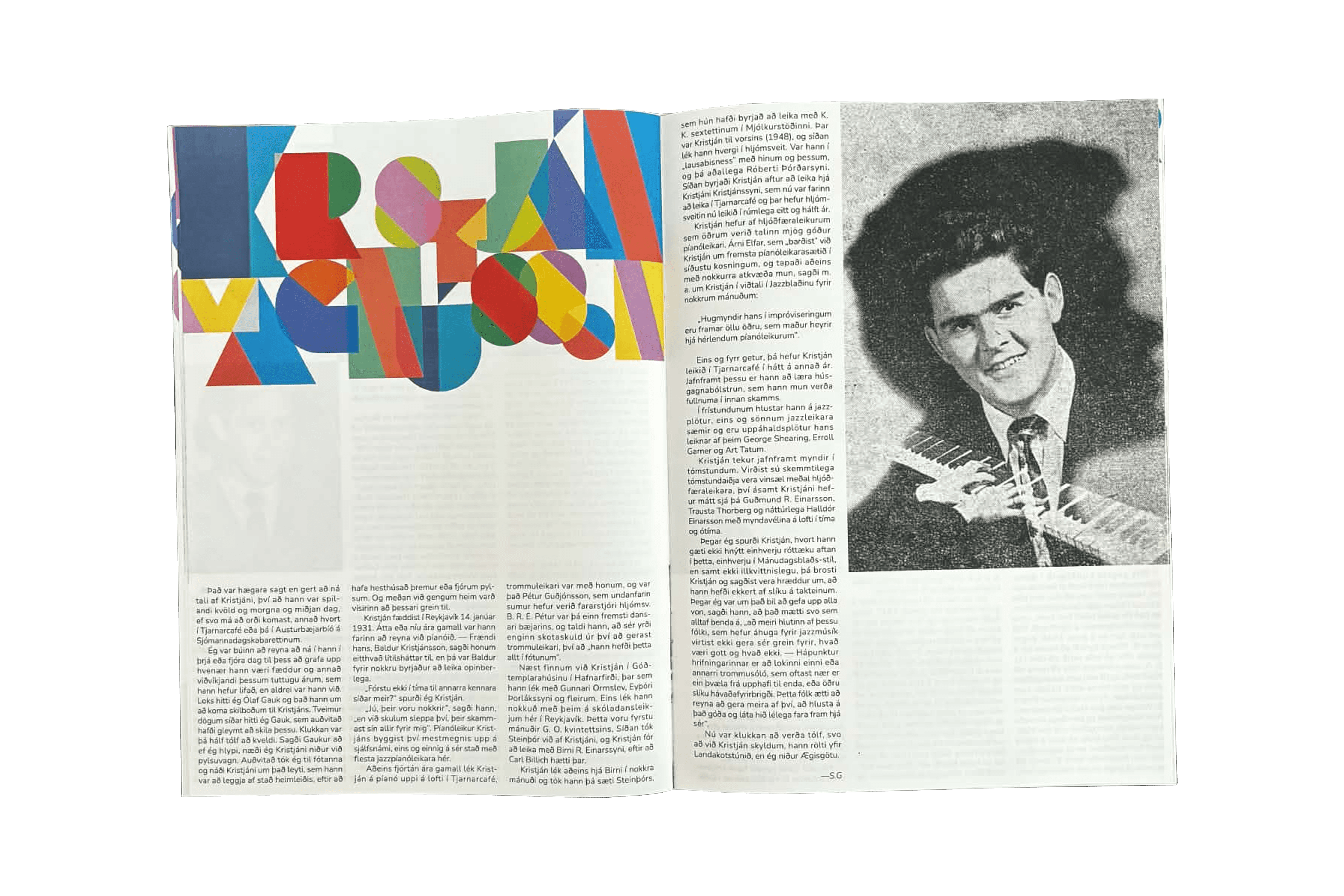
This project was part of a course on content-based design. My chosen subject was a recurring segment in Jazzblaðið—an Icelandic jazz magazine published between 1948 and 1953—called Íslenzkir Hljóðfæraleikarar (“Icelandic Instrumentalists”), which featured profiles of Icelandic jazz musicians. The objective was to republish the original content in a contemporary format, and I chose to do so through the design of a magazine.
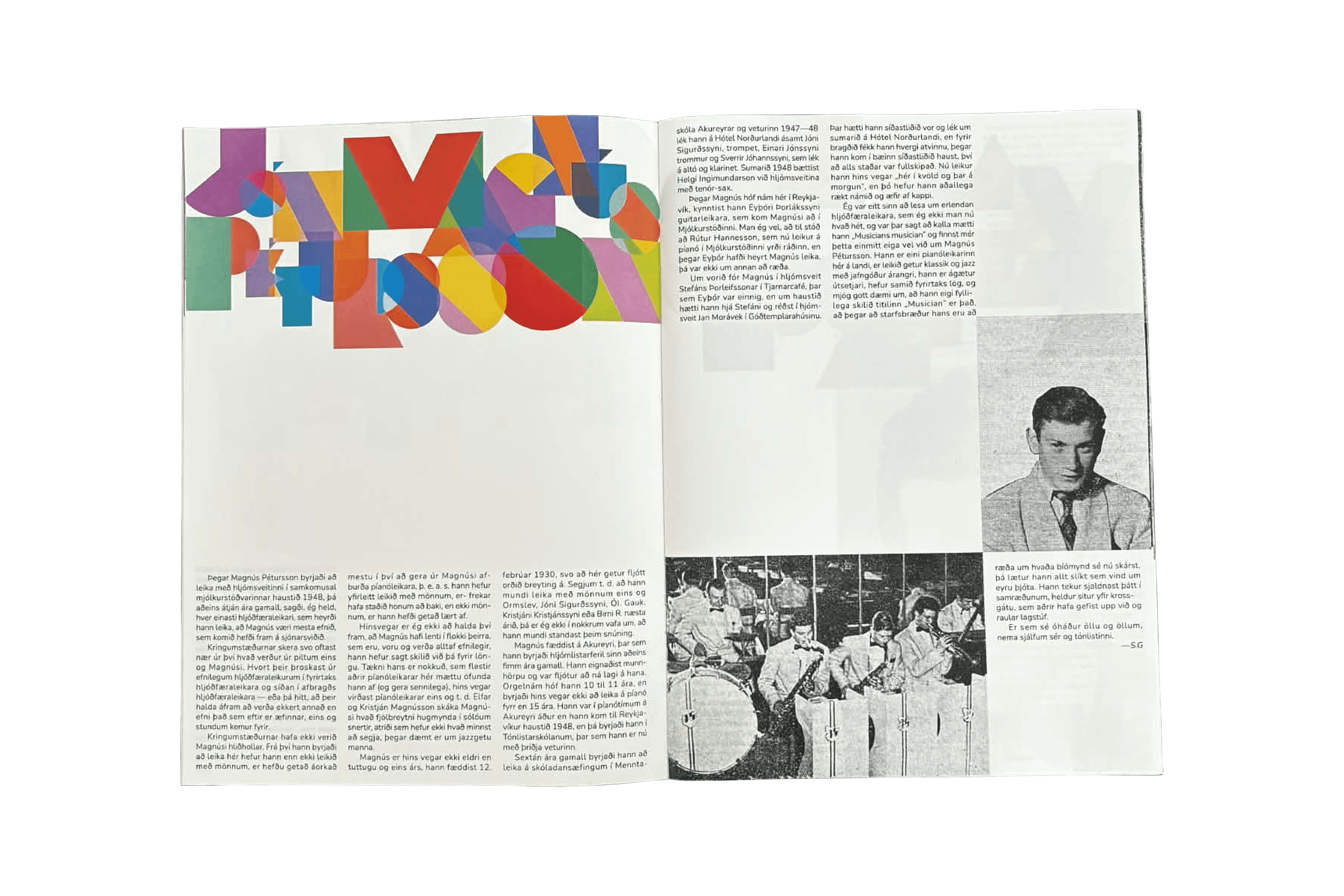
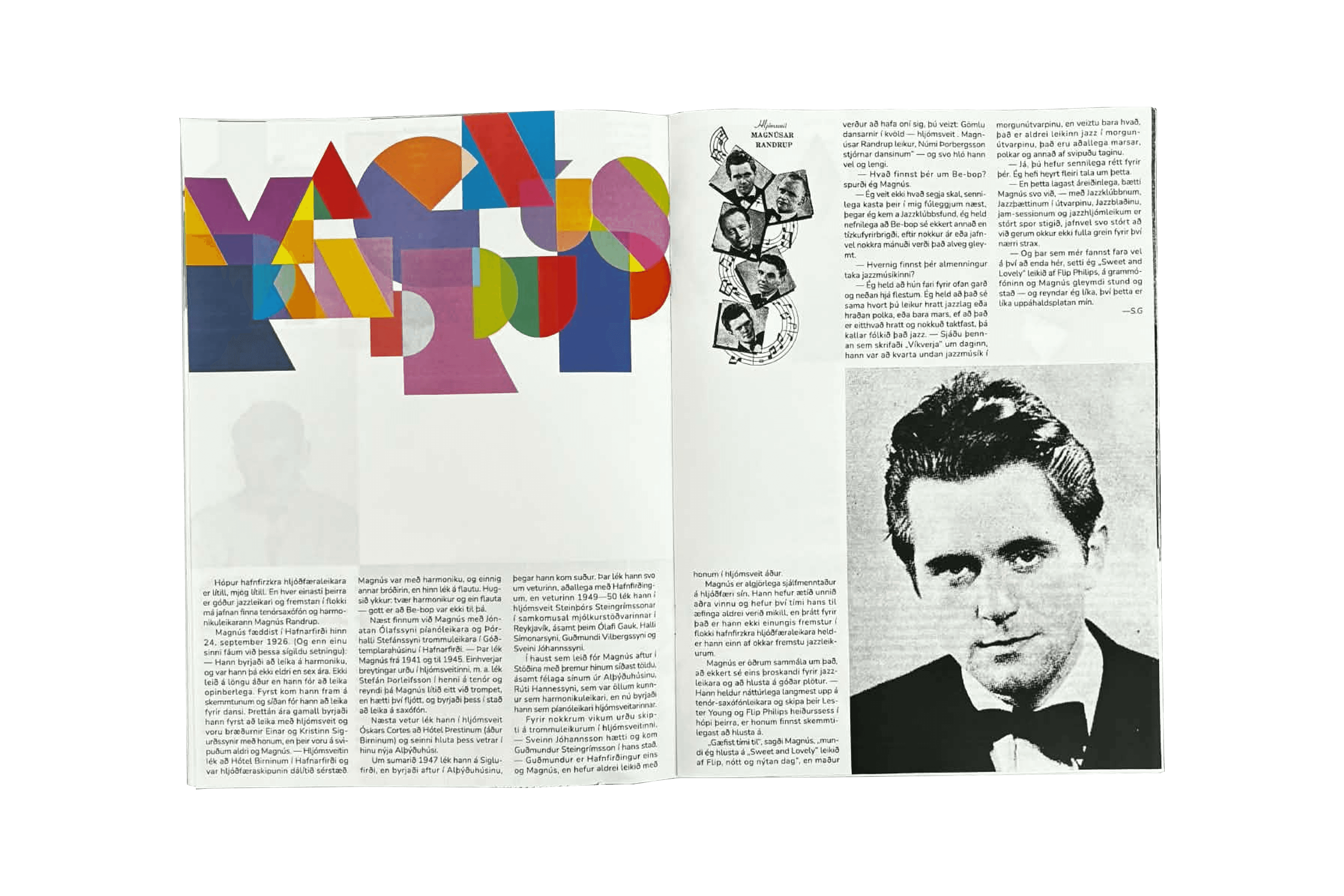
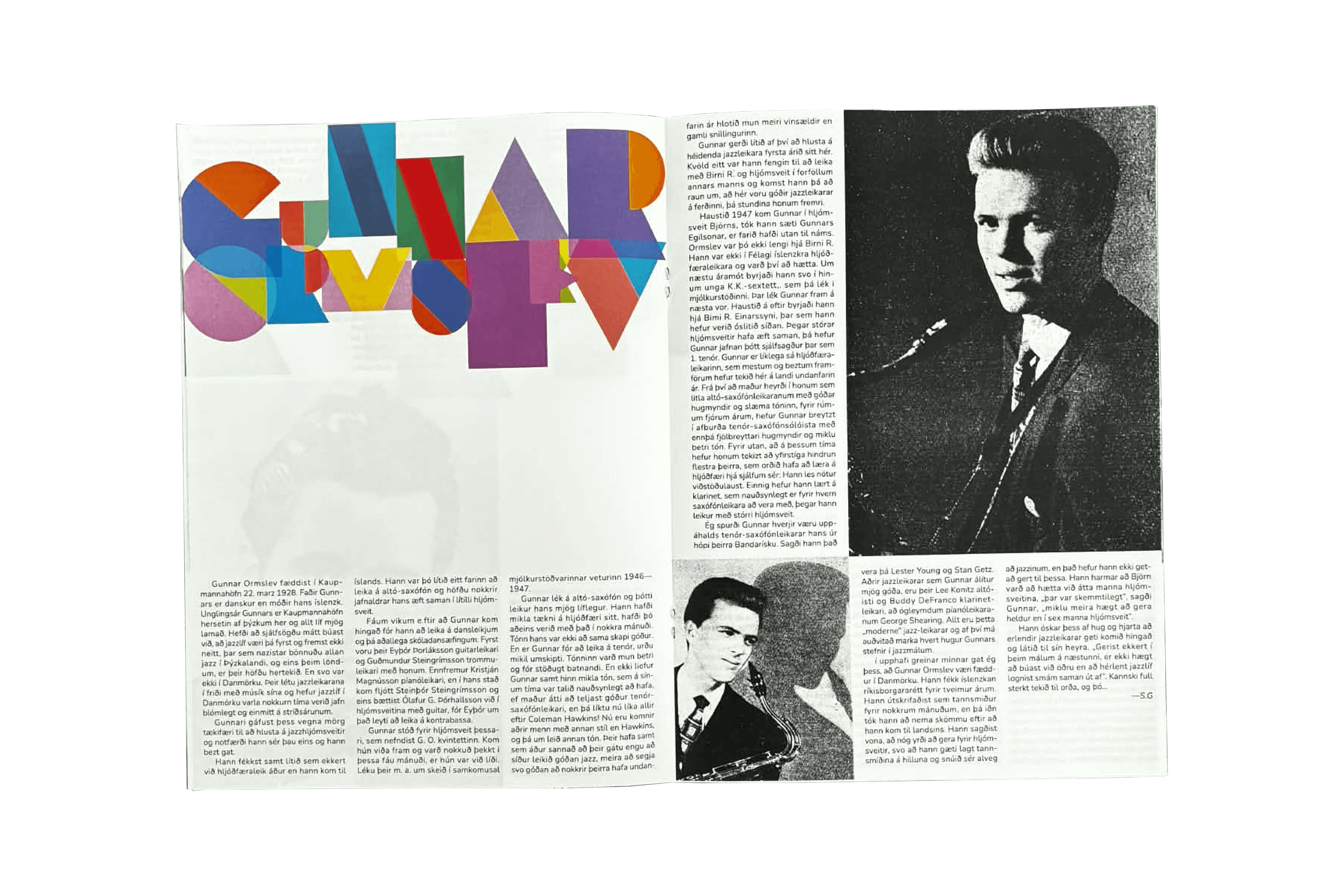
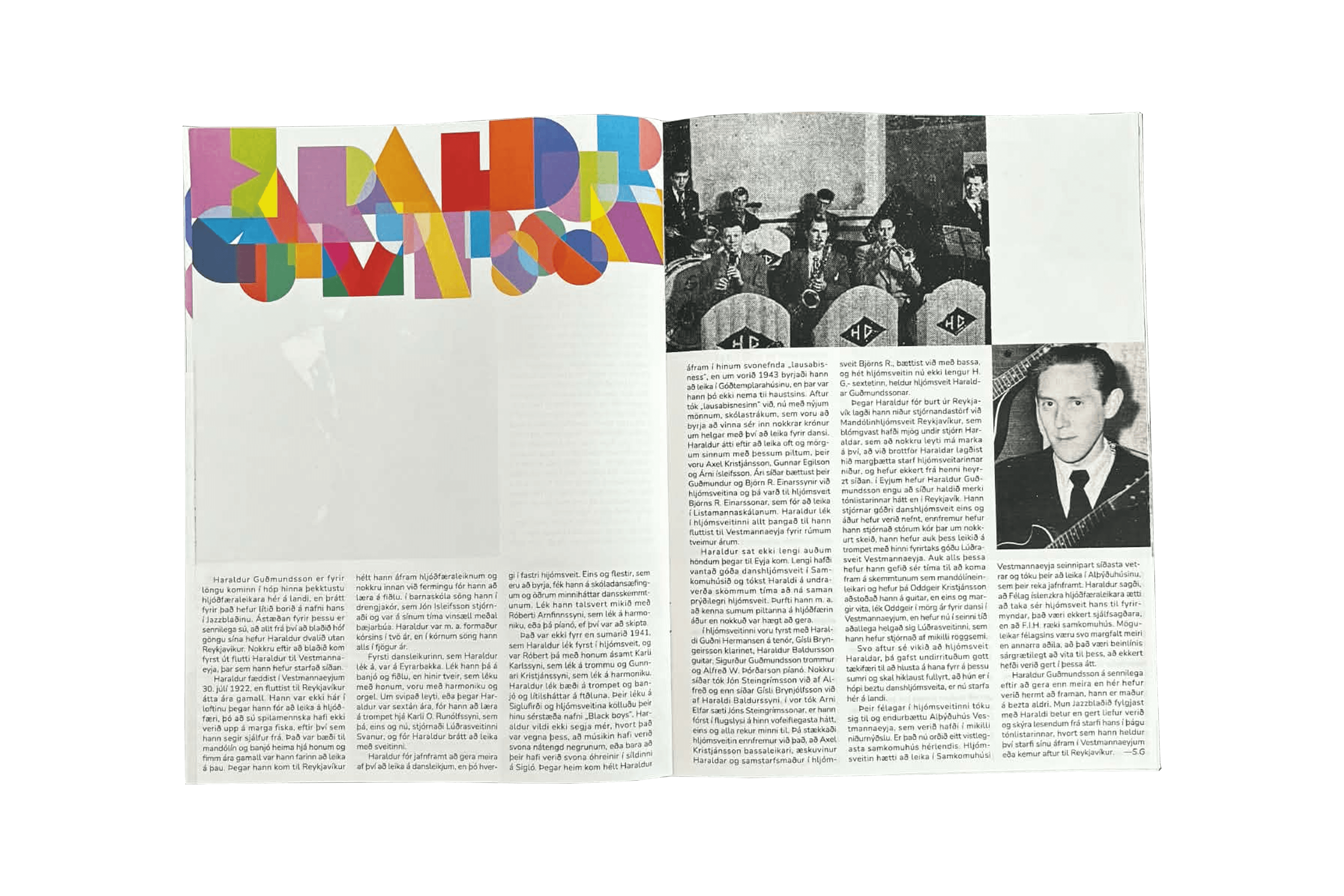
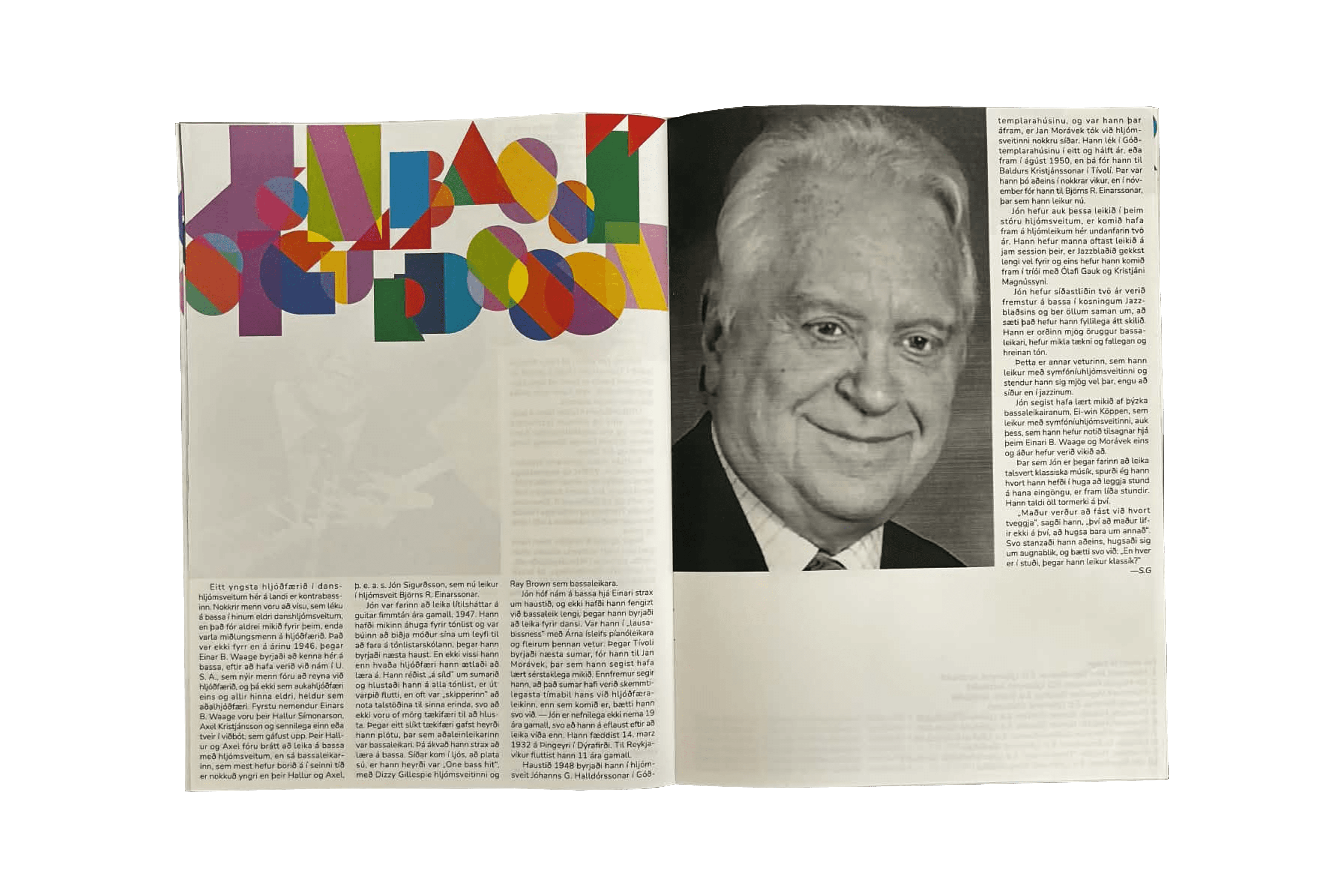
The project involved careful consideration of the cover design, illustrations, layout, typeface selection, and material choices. These elements were developed to create a visual identity that combined modern design principles with influences from Art Deco, Cubism, and the expressive energy of jazz.
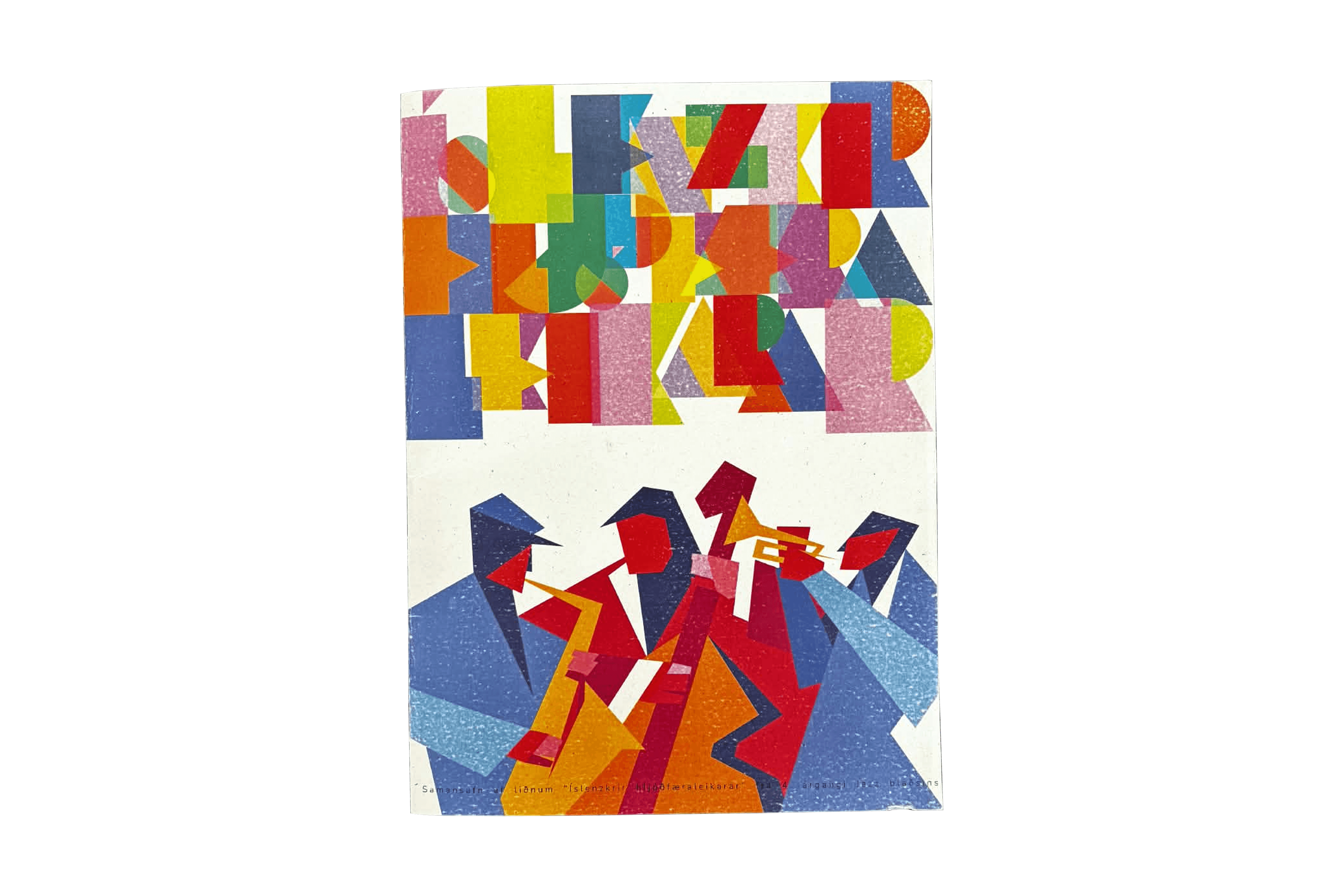
Cover
For the cover, I used the Cudeco typeface to create an abstract display treatment of the title Íslenzkir Hljóðfæraleikarar.
The cover imagery consists of a Cubism-inspired illustration of a jazz band, chosen for its strong connection to the subject matter. The illustration reinforces the publication’s historical context while contributing to the modern, Art Deco–influenced visual identity of the project.
Made with Illustrator & Indesign
Main Body
I developed a grid system to organize the main body text and imagery, but I intentionally broke its structure throughout the publication. This approach allowed the layout to remain modern while also capturing the improvisational quality associated with jazz. The Cudeco typeface was once again used as a display font for the musicians’ names. In hindsight, however, I would have preferred to set these names in a more legible typeface, perhaps in the footer or another secondary position.
The choice of paper required considerable thought. Initially, I was deciding between a glossy magazine stock and a paper more reminiscent of a newspaper. Due to an orange weather warning, the store I had planned to visit was closed, so I explored alternatives and ultimately found a paper stock that sat somewhere between the two options. For the cover, I selected a thick craft paper, which I appreciated for the way its texture and grain interacted with the ink. Looking back, however, I think a thinner paper might have been more effective, as it would have enhanced the translucent, layered qualities of the magazine.
I also considered binding the publication with twine to emphasize its handcrafted character, but ultimately chose staples for their simplicity and practicality.
Made with Indesign